Monday, November 21, 2022

The top 8 most common stress-related questions, answered.
The irony is that it’s kind of stressful to find answers about stress.
There’s so much conflicting information out there.
But if you’re a health and fitness professional, your clients—maybe even your friends and loved ones too—will likely turn to YOU for counsel.
They’ll ask things like:
“Is stress REALLY toxic?”
“Do you think stress caused this belly fat I can’t lose?”
And:
“Are these red bumps from stress?”
(Why does everyone insist on showing you their rashes??)
You want to help, but coming up with the right answers can be hard, because:
The right answer depends.
It depends on WHO the asker is, WHAT their goals are, WHERE they’re starting from, and HOW MUCH they’re willing and able to change
The truth is, one-size-fits-all answers to stress-related questions don’t exist.
However, you can build a strong foundation of knowledge about stress that can help you answer these questions with more confidence and expertise.
In this article, we’ll try to give you some resources to do that.
If you want, read the following Q and As from top to bottom. Or, just jump to the ones that interest you the most:
Question #1. Is stress really bad for you?
Question #2. What are the signs of stress?
Question #3. Is stress making me gain / lose weight?
Question #4. How can I stop stress eating?
Question #5. How do I get rid of stress?
Question #6. How do I fit in stress-management strategies and self-care?
Question #7. Is there a diet that will help reduce stress?
Question #8. Is there any way to cool stress fast?
Question #1. Is stress BAD for you?
Yes and no. It’s all about the right amounts—for YOU.
The relationship between stress and health has gained a lot more attention and validity in the past 30 years.
As a result, you’ve likely learned to associate stress with all kinds of terrible things: heart attacks, hair loss, early death.
And while excessive, unrelenting stress definitely erodes health, let’s clear something up:
Not all stress is bad.
In fact, in order to thrive, we actually need some stress to feel juicy, purposeful, and alive.

As the above chart shows, it’s all about finding a stress “sweet spot.”
Go too far in either extreme, and you’ll feel crummy.
How do you find your stress “sweet spot”?
Stress that’s long-lasting, relentless, and demoralizing is also the kind of stress that’s associated with depression and anxiety, cardiovascular disease, diabetes, stroke, and cancer.1
If you’re dealing with those kinds of stressors, consider where you have control, and try to reduce—or even avoid—them when you can.
Also, ask for help. Sometimes having another person around to tackle a problem with you makes the difference between feeling like you’re drowning and feeling like you’ll make it to the shore.
On the flip side, when stress occurs in shorter bursts, and you feel like you have some control over it, as well as opportunities to recover in between, it can actually help you become stronger and more resilient over time.
This kind of stress tends to feel empowering: It helps build you up; not break you down.
One big complication…
What feels stressful is highly subjective.
Turns out, your perception of stress has a big impact on how stress feels—and what it does to your health.
If you believe stress is always terrible and should be avoided at all costs, you’ll be more likely to cling to your comfort zone, fear the future and what could happen, and steer clear of situations that could lead to growth.
(You’re also more likely to experience the negative health effects of stress, like high cortisol.2)
In a cruel self-fulfilling prophecy, stress actually does become more harmful.
However, if you believe stress can make you stronger, wiser, and more resilient, you’ll be more likely to proactively solve problems, seek out challenging experiences—and benefit from stress in your life.
Luckily, you have some control over your perception.
In the spirit of helping you shift your perspective, here are some examples of how some stress can actually enrich various aspects of life:
 Stress can strengthen relationships. Some conflict is actually crucial for healthy, secure relationships—it’s a pathway to better understand others. By working through things together, we grow together.
Stress can make you smarter. Managed effectively, stress helps you focus your attention, plan for future challenges, and enhance memory and learning. Stressors might even feel like fun puzzles to solve.
Stress can build muscles and endurance. This is probably the most obvious example, but most of us know that intermittent physical stress—say, from a workout—couped with appropriate recovery helps your body become stronger and more capable.
Choose to believe that stress has the capacity to benefit you. It can help you learn, grow, and live a bigger, more adventurous and meaningful life.
LEARN MORE:
- Good stress, bad stress: Finding your sweet spot [INFOGRAPHIC]
- Secrets for using stress to build you up—instead of break you down
Question #2. What are the signs of stress?
The signs and symptoms of stress depend a little on whether the stress is acute or chronic.
Acute stress (think: a car just swerved in front of you) generally causes your sympathetic nervous system to ramp up, which releases hormones such as epinephrine (adrenaline) and cortisol.
With acute stress, you might notice:
- Your heart beats a little faster
- Your breathing gets deeper and quicker
- You feel a burst of energy, alertness, giddiness, and/or focus
- You might feel a little shaky or even nauseous, if the stress was intense
The stress response is built-in. You don’t have to think consciously about it; your body just responds automatically in this way to all stressors.
Luckily, the recovery response is also built-in. Once a threat recedes, your heart rate and breathing will return to normal, and you’ll feel calm again.
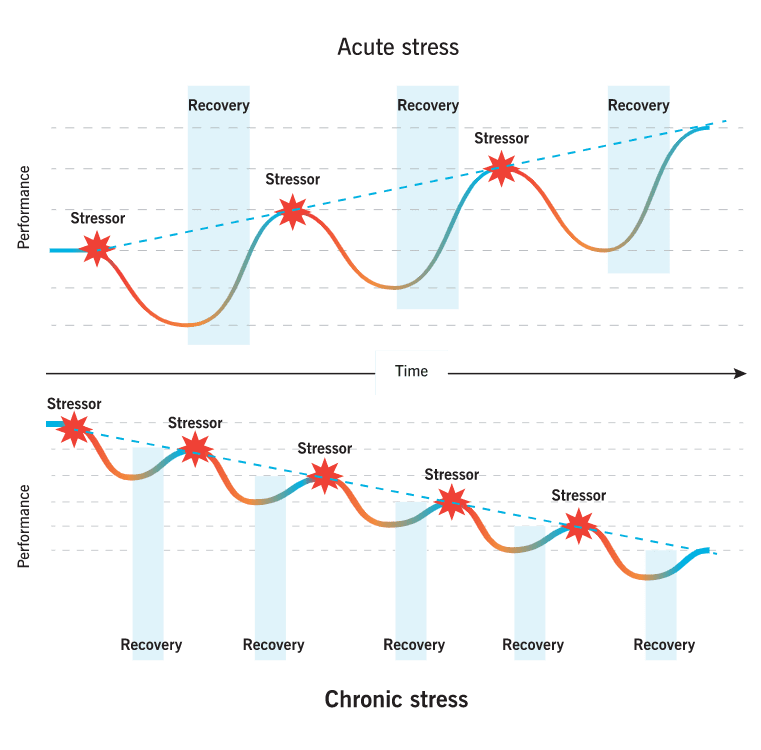
Chronic stress is when that sympathetic activation lasts for days, weeks, or months, without adequate opportunities for recovery.
Just like a rollercoaster, stress can feel energizing in short bouts—but like a nauseating nightmare if you can’t get off the ride. Not surprisingly, chronic stress is more likely to take a toll on your physical and mental health.
Signs of chronic stress include:
- Excessive worrying or anxiety
- Low mood or energy
- Poor appetite, OR an increased desire to “stress eat”
- Digestive problems like heartburn or constipation
- Trouble sleeping
- Unfocused or foggy thinking
- Feeling isolated or irritable with others
- Frequent colds, flus, or infections
- Trouble recovering from workouts, or aches and pains in general
- Low sex drive
While the stress response is normal and helpful for short-lived bouts of challenge and excitement, we’re not meant to live in a constant state of activation and threat.
Stress feels best when it’s broken up with periods of recovery.
READ MORE:
The difference between stress and anxiety
Everyone experiences stress.
Most people will also experience anxiety.
(At least to some degree, at some point.)
Anxiety often involves physical symptoms—tension, increased heart rate, sweating.
But the hallmark aspect of anxiety is a persistent feeling of apprehension or dread.
Although this feeling sometimes seems like it arises from nowhere, it’s usually caused—and perpetuated—by negative thoughts and ruminations like, “I’m never going to get through this” or “Everyone is going to judge me.”
(Overly negative or catastrophic thoughts are also called “cognitive distortions.” Read more about how to deal with them here: The thought tool that can lower your stress instantly)
Stress usually starts in response to an event or situation, and ends when that situation has resolved.
But with anxiety, the “threat” tends to persist even beyond the scope or duration of the event.
While stress can trigger helpful adaptations, anxiety tends not to be super productive. In excess, it can feel pretty debilitating.
The good news
Many stress management techniques are also effective at reducing anxiety.
Journaling, exercise, social connection, and relaxation exercises like breathwork or positive visualization can help with both stress and anxiety.
However, if anxiety is especially intense, long-lasting, or interferes with your quality of life, it’s best to consult a healthcare professional like a therapist or a family doctor.
If you’re a coach, remember that you’re not qualified to diagnose or treat clinical anxiety or depression. If your client struggles with either, the best way you can support them is to refer out to a medical professional who specializes in mental health.
(Trying to help clients with their mental health? Read this first: “I’m a coach, not a therapist!” 9 ways to help people change while staying within your scope)
Question #3. Is stress making me gain / lose weight?
Possibly.
But more likely, stress is affecting your behaviors. And eating behaviors definitely affect body composition.
Here’s how it works
When you’re stressed, your physiology changes—at least temporarily.
Your body’s acute stress response and the accompanying spike in adrenaline releases stored glucose (sugar) into the bloodstream so you have energy to deal with whatever challenge you’re facing.
This increase in blood sugar can reduce your appetite, making you push away your sandwich even if you haven’t eaten all day.
The stress response also dampens digestion.
Even when you do eat, food might feel like it’s just sitting in your gut not moving anywhere, or it might blast through you so fast that you’re afraid to stray too far from a washroom. Because digestion is compromised, you also may not adequately absorb your food.
It’s through both loss of appetite and loss of absorption that some people lose weight during periods of stress.
On the other hand, weight gain during periods of stress is just as common.
Especially when stress becomes chronic, the stress hormone cortisol increases. Cortisol can increase appetite, especially for carbohydrate- and calorie-rich foods.3 4
Most people find eating pleasurable and soothing, so turning to food during times of stress is a common (and understandable) coping mechanism. Of course, when this becomes a habit, excess calories over time can lead to weight gain.
If that’s something you struggle with, check out the next answer below.
READ MORE:
Question #4. How can I stop stress eating?
More than 60 percent of our new clients list emotional or stress eating as a major nutrition challenge. What’s more, over 50 percent say they also “get intense cravings” and “snack when not hungry.”
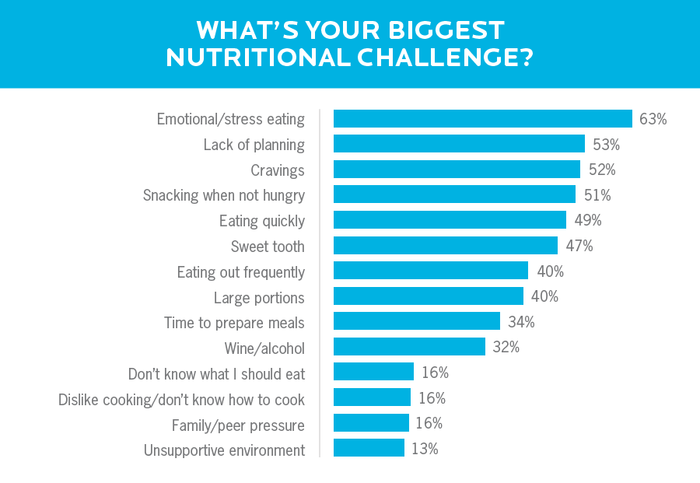
If you relate, it might be a relief to know you’re not alone. Of course, that’s little consolation when your hands are fumbling for crumbs at the bottom of a freshly opened bag of peanut butter pretzel bites.
But what if you realized this behavior occurs…
- Every time your mom calls?
- On Sunday nights, when you’re dreading the start of a new week?
- Whenever you see, smell, or hear something that reminds you of your ex?
Emotional eating and intense cravings are typically part of a pattern of behavior that’s triggered by a specific experience—a thought, feeling, and/or situation.
If you can identify the trigger, you can disrupt the pattern of behavior and make different choices.
Use the “Break the chain” worksheet to help clients identify their emotional and stress eating triggers. Then, apply the step-by-step strategy at the end of it to create and strengthen alternative coping mechanisms.
READ MORE:
Question #5. How do I get rid of stress?
You’ll never entirely rid your life of stress.
Nor would you want to.
As we’ve mentioned, stress is a normal—even good—part of a full, meaningful life.
However, many of us end up with stress levels that feel overly disruptive or unhelpful.
Sometimes, that’s impossible to avoid. At some point, most people will face very difficult periods of unavoidable stress: illness, injuries, financial hardships, natural disasters, or a pandemic.
But often, you have some control. Maybe even more than you think.
At PN, we use an exercise called The Spheres of Control.
(If you want, fill out your own spheres of control using this free worksheet.)
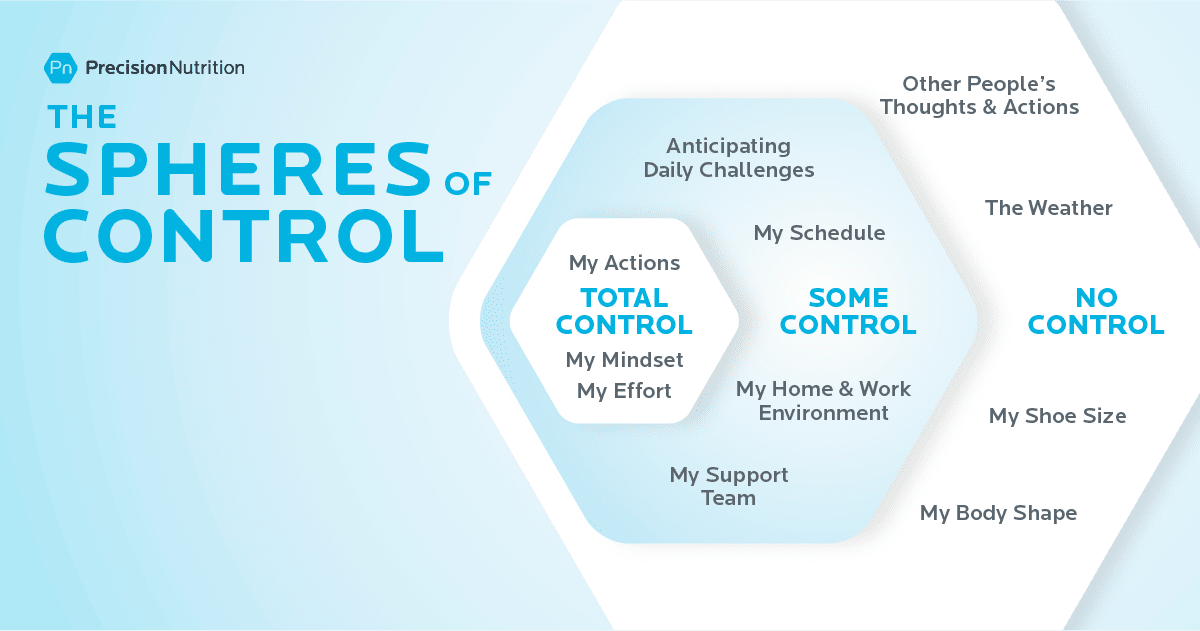
With the Spheres of Control exercise, you identify what areas you truly have power over and focus more on them.
This often not only helps people feel less overwhelmed and stressed, but also more effective, capable, and in control.
What about those areas you have zero control over?
By seeing the reality on paper (or a screen), you can give yourself permission to stop wasting precious energy trying to control the uncontrollable. And that in itself can help relieve stress and anxiety.
READ MORE:
Question #6. How do I fit in self-care?
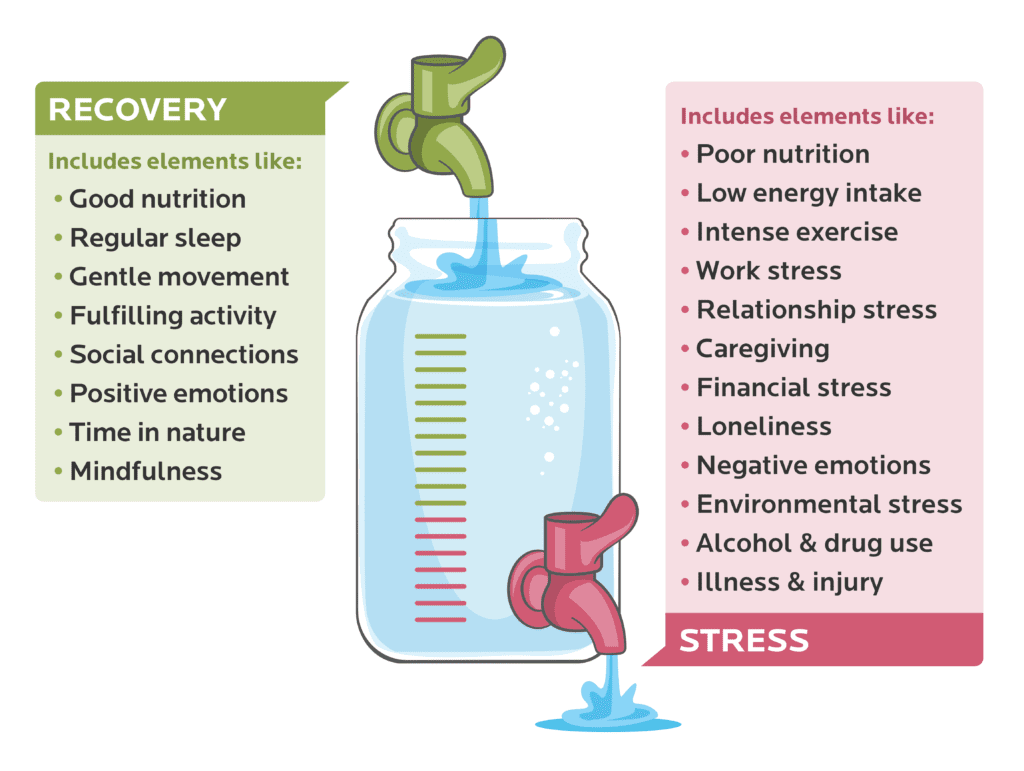
Sometimes, adding more recovery can be just as effective as reducing stress.
When you recover, you regain, restore, or recuperate what you’ve lost. And you return to your baseline state of wellbeing, health, and performance.
Sounds great, except… what if you feel like you don’t have time to ADD anything else, even if it’s good for you?
A paradigm shift that might help
Instead of looking at stress management as an “on” or “off” switch—you’re either doing ALL the things or NOTHING—think of it more like a “dial.”
The image below shows what stress recovery might look like on a continuum, from devoting five minutes a day to something restorative, all the way to basically making it your job to be a Master of Chill.
(If you want to see how this concept applies to other habits—like those related to nutrition or fitness—check out this infographic: Never press “pause” on your health and fitness again)
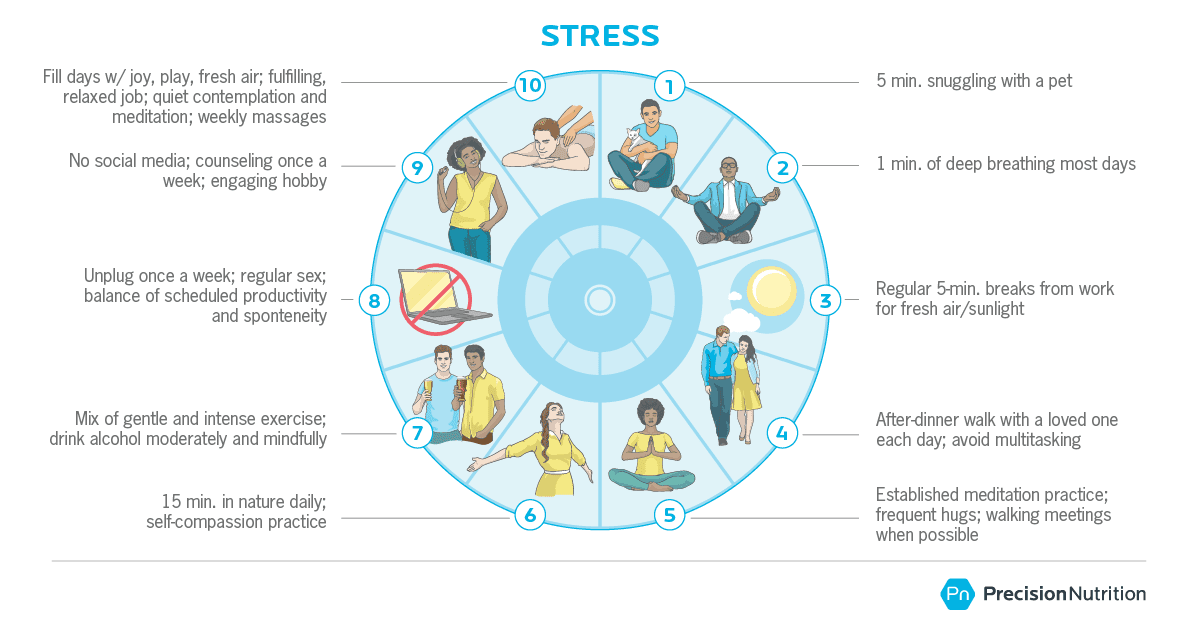
To apply this concept, start by identifying your baseline: Are your stress management practices currently at a 1 or 2? Or maybe even a 0?
If so, no judgment. This is just your starting point.
Think about what “a little better” might look like.
Even by one or two “notches.”
Might you add five minutes of journaling to your evening routine? Or a 10 minute walk to get some sun and fresh air in the morning? Consider what just a little better might look like, and start there.
For the extra frazzled, it might help to know that sometimes the BEST time to start a new habit is when you’re busiest.
If you can learn to fit stress management practices into your life when you’re swamped, it’ll feel like a breeze to keep them in there—or even build on them—when life settles down.
(And if life never settles down, at least you didn’t delay your self-care further waiting for the “perfect time.”)
READ MORE:
Question #7. Is there a diet that will help reduce stress?
All over the internet, you’ll find curative diets for stress and anxiety. They put food into neat little categories, and so long as you ONLY eat “do” foods—and judiciously eliminate “don’t” foods—your stress will go away.
If only feeling better were that simple.
Truth is, good mental health depends on many different nutrients from many different foods, as well as a set of fundamental nutrition principles, like:
- Getting enough energy (calories) to cover your energy needs
- Meeting macronutrient (proteins, carbohydrates, and fats) and micronutrient (vitamins, minerals, and phytonutrients) needs
- Drinking enough water
- Eating at regular times, whatever that means for you
- Consuming mostly minimally-processed foods (like fruits, vegetables, whole grains, legumes, nuts, seeds, animal proteins, and dairy)
- Eating slowly and mindfully
- Enjoying your food, and the company you share it with
Consistently neglecting the above can add stress.
Prioritizing them—which doesn’t mean doing them perfectly—is probably the most effective nutrition strategy to reduce stress.
If that list looks overwhelming, just start from wherever you are right now, and simply aim to eat “a little better.”
![Image shows a horizontal scale going from red (needs improvement) to green (doing awesome). If you are in the red, you may try aiming for orange or yellow, or just a little bit better, before you get to green.]](https://www.precisionnutrition.com/wp-content/uploads/2022/11/NutritionalSweetSpot_Revise2.png)
Choose one practice to work on from the above list, and in a couple of weeks, evaluate whether you’re ready to build on it.
Master the fundamentals, and you’ll see that they’re pretty effective on their own, no magic diet needed.
READ MORE:
Question #8. Is there a way to calm stress fast?
No matter what’s going on in your life, one of the most effective, accessible ways to cool stress FAST is simply to breathe.
Slow, deep breathing stimulates your vagus nerve (the main nerve of your “rest-and-digest” system), which can help relax your whole body.
In turn, this reduces not only your physiological response to stress but also your emotional response.
When you’re calmer and more relaxed, you make better decisions. You’re able to focus better. You feel more in control. And deliberate breathing techniques can help.
One breathing technique we like is called “Box breathing.” It breaks the breath cycle into four 4-second-long stages (like the four sides of a square).
Here’s how to do it
- Take a four-second inhale through your nose. But don’t just “breathe into your belly.” Try to pull the air into your chest and mid-back without letting your ribs flare out. (You’ll feel some tension in your abs.)
- Hold your inhale for four seconds.
- Exhale for four seconds. Imagine that you’re slowly blowing out a big sigh. Keep your body relaxed, but put a little tension into your abs so that you feel them pulling your ribs down and in, toward your spine.
- Hold your exhale for four seconds.
Repeat as many times as you’d like. (And feel better.)
READ MORE:
Stress is uncomfortable, but it also helps us grow.
If you’re stressed about answering your clients stress-related questions, think of it this way:
This is an opportunity to expand and deepen your knowledge and coaching skills.
(See? We’re applying a resilience-building mindset already!)
Being a coach who helps clients manage their stress involves, yes, knowing about stress.
But it also means being a fellow human who can relate to their struggles.
Alongside your clients, you can use your knowledge about stress and recovery to take on challenges, and grow into a better coach—and person—than you were before.
References
Click here to view the information sources referenced in this article.
If you’re a health and fitness pro…
Learning how to help clients manage stress and optimize sleep can massively change your clients’ results.
They’ll get “unstuck” and finally move forward—whether they want to eat better, move more, lose weight, or reclaim their health.
Plus, it’ll give you the confidence and credibility as a specialized coach who can solve the biggest problems blocking any clients’ progress.
The brand-new PN Level 1 Sleep, Stress Management, and Recovery Coaching Certification will show you how.
The post The top 8 most common stress-related questions, answered. appeared first on Precision Nutrition.
from Precision Nutrition Blog | Free articles & Infographics https://ift.tt/qGKQokj
via IFTTT
Thursday, November 17, 2022
The top questions people ask about sleep—and how to answer them
Reviewed by Jennifer Martin, PhD
Google hears about everyone’s sleep problems, at all hours of the night.
And chances are, if BILLIONS of people are wondering why they can’t sleep, why they keep waking up at night, what they can do to fall asleep faster, and how long they should be sleeping, your clients are wondering, too.
In this article, we’re going to cover everything you need to know about the sleep problems your clients are likely to struggle with the most, along with science-supported practices that can help.
In this article, we’ll try to give you some resources to do that.
If you want, read the following Q and As from top to bottom. Or, just jump to the ones that interest you the most:
Question #1. Why can’t I sleep?
Question #2. Why do I keep waking up at night?
Question #3. How much sleep do I need?
Question #5. What’s the best way to track sleep?
Let’s start with the top sleep question people type into Google—likely bleary-eyed, at 3 am…
Why can’t I sleep?
Technically, everyone can sleep. Stay awake long enough and sleep will absolutely find you. Our sleep drive is built into our biology.
So when someone types “why can’t I sleep?” into Google, what they’re really asking is:
“Why does it take so long for me to fall asleep?”
Usually, one of the following is going on, says Chris Winter, MD, author of The Sleep Solution and The Rested Child, and co-author of Precision Nutrition’s Sleep, Stress Management, and Recovery Coaching Certification.
Answer #1: You have anxiety over not being able to sleep.
Here’s a common scenario:
You go to bed at your usual time.
Twenty minutes go by. Then an hour. Blink. Blink. Still awake.
As you toss and turn, you think things like, “Ugh, again? WHY?! Tomorrow‘s going to be a disaster! I NEED to sleep… NOW!”
Naturally, those thoughts lead to anxiety, and trigger the release of brain chemicals that keep you alert and (gulp) awake.
To break this maddening cycle, address and reframe the underlying thoughts and emotions. You’ll likely discover you have some unhelpful and maybe even unrealistic beliefs about sleep.
Rather than berating yourself for not sleeping, consider gently reminding yourself that…
You’ll fall asleep eventually. Like we said earlier, all humans have an innate drive and capacity for sleep.
You’re likely getting more sleep than you realize. According to Dr. Winter, most people aren’t aware of their lightest sleep phases. They think they’ve spent most of the night awake when, in fact, they slept several hours.
Occasional sleep loss is normal. Especially during times of excitement, anticipation, change, or stress. For most, this is a temporary phase. Trust that your sleep will recalibrate eventually.
(For more ideas on how to break free from sleep anxiety read: How to Sleep Better When Nothing Helps You Sleep Better)
Answer #2: You have an afternoon coffee habit.
Caffeine blocks the function of adenosine, a neurochemical that makes you sleepy.
But that doesn’t mean you have to give up caffeine entirely.
Some people find that cutting back—say, having just one espresso shot instead of two—ameliorates their sleep issues.
Other clients have told us that they’re okay if they have caffeine before noon, but not after.
Answer #3: You sleep in.
It takes about 16 hours of wakefulness for enough adenosine to build up in your brain to nudge you into slumber.
So, waking up later means you probably won’t feel sleepy until later.
(In other words, do the math: Sleeping in until 10 am might mean that your brain isn’t ready to rest until about 2 am.)
It’s tempting to keep hitting snooze, especially if you slept crummy the night before, but do your best to get out of bed at a reasonable time, and you’ll set yourself up better for a reasonable bedtime.
Answer #4. You don’t get much sunlight, especially in the mornings.
Most organisms, including humans, have evolved to organize their physiological processes in response to light and dark.
Morning sunlight in particular seems to help set the body’s circadian rhythm, helping you feel tired when it gets dark in the evening.
Try to get 10 to 20 minutes of sunlight within two hours of waking up. (And yes, overcast days still count!)
Answer #5. You snuggle up to screens in the evening.
Melatonin increases sleep drive as night approaches, but it requires relative darkness to do its work.
Light from phones, tablets, televisions—also known as blue light—and even overhead incandescent lighting can disrupt this sleep-promoting hormone, making sleep elusive.
As the sun begins to lower, lower the lighting in your house too. If you can, limit screen time especially in the hour before bedtime.
5 evergreen strategies to improve sleep
Sleep hacks come and go, but these five principles of good sleep are nearly universally recommended by sleep experts and good sleepers alike:
1. Keep your sleep-wake schedule consistent.
Wake at roughly the same time each day (including weekends) and hit the sack around the same time each evening.
2. Use a pre-sleep ritual.
About 30 to 60 minutes before going to bed, get into wind-down mode. Turn off screens. Dim the lights. Relax with a bath, stretching, or time with a book. By doing the same behaviors each evening, you’ll train your brain to know it’s bedtime.
3. Avoid high-fat, high-calorie evening meals.
Consume moderately sized meals no later than 3 hours before bedtime. Eat meals higher in carbohydrates and protein rather than high-fat meals, which can worsen sleep quality in some people.
4. Avoid energizing exercise in the evening.
Schedule weight lifting and intense cardio earlier in the day. Closer to bedtime, opt for calming, gentle movements like walking or slow yoga.
5. Keep your room dark.
If possible, make your bedroom as dark as possible or consider wearing a sleep mask. That way, you reduce interference from street lights or other lights in your environment, which can inhibit melatonin.
(For more science-based advice to get more rest, read: How to Sleep Better: Your 14-Day Plan for Better Rest)
Why can’t I sleep through the night?
Lots of people wake at night—and Dr. Winter wants to tell you it’s no big deal.
Here are a couple of scenarios that often distress people, but are actually totally normal:
Early waking: You’re wide awake at 5 am, a full two hours before your alarm. Even though you think you should be sleeping longer, your brain might be fully recharged and ready to slay your day.
Biphasic sleep: You sleep for several hours, then wake and feel alert for 45 minutes or so, and then go back to sleep for several more hours. If that’s you, drop any anxiety over your mid-night waking; just assume it’s normal, read for a little bit, then let yourself fall back asleep when you’re ready.
For both of the above situations, if you feel rested and alert during the day, there’s no true sleep problem, says Dr. Winter.
On the other hand, if it seems as if no amount of sleep will fix how tired you feel, consider whether any of the common offenders might be interfering with your ability to sleep through the night.
What Wakes People During the Night
If you’re someone who has trouble falling asleep again after you’ve woken up in the middle of the night, it might help to prevent disruptions from happening in the first place.
Take a look at the following list of common nighttime troublemakers, and see where you have control modifying or avoiding them:
Alcohol: Having a nightcap (or two) often helps people feel more relaxed—and maybe even fall asleep faster. But as alcohol metabolizes, your body experiences “rebound” arousal, causing a fitful sleep.1
Caffeine: As mentioned, caffeine blocks the function of adenosine, a neurochemical that makes you sleepy. Try to avoid caffeine—not just coffee, but caffeinated soda, too—a minimum of six hours before bedtime.
Intense evening exercise: A natural effect of intense exercise is an increase in cortisol, a hormone that makes us feel alert. Some people find that if they exercise vigorously too late in the evening, they still feel “pumped up” when it’s time to sleep.
Sedentary lifestyle: Research shows that people who are chronically deprived of physical activity are more likely to struggle with insomnia.2 This can create a vicious cycle, because if you’ve slept poorly the night before, you might be inclined to stay in bed or on the couch the next day. Even if you’re tired, get your steps in. One study showed sleep quality was better in those who walked more.3
Smoking cigarettes: Nicotine is a stimulant. So, much in the way that caffeine can jangle your nerves too close to bed, so can cigarettes (or vaping).
Drinking liquids too close to bed: Have a recurring dream where you’re running around trying to find a bathroom, and every stall is locked? Avoid drinking liquids two to three hours before bed, and you’ll be less likely to be tormented in the middle of the night with a full bladder.
Snoring spouse: Snoring isn’t grounds for divorce, but it’s definitely grounds for investing in a good pair of earplugs. Or maybe separate bedrooms. (And if your spouse sounds like a lawnmower, get them to ask their doc about it. Snoring is a common sign of sleep apnea.)
Pets and children: Co-sleeping with pets or children sounds cozy, but if it’s disrupting your sleep, it might not be worth it. Set Rover up with a dog bed (maybe in a separate room). If kids keep coming into your bed at night, calmly walk them back to their room, and tuck them in. With consistency, most kids (and pets) learn to sleep on their own.
In addition to the above, talk to your doctor about your sleep. It might be worth getting screened for sleep apnea, restless legs syndrome, and other conditions that disturb sleep.
How much sleep do I need?
On average, most people need somewhere between seven and nine hours of sleep each night.
But that’s an average, not a good-health edict.
“There are people who require slightly more and slightly less sleep,” says Dr. Winter. Above- and below-average sleepers fall into three main categories:
Natural short sleepers feel spunky and clear-headed with just six or seven hours of shuteye.
Natural long sleepers need 10 or more hours in order to feel refreshed.
Children, teenagers, and many young adults need more sleep for their developing bodies and brains.
Meanwhile, others sleep 14, 17, 24 or more hours with very little interruption—and still wake feeling tired.
“If you’re one of these people, it might be an indication that there is something wrong with your sleep quality, not necessarily the quantity,” Dr. Winter says.
For example, sleep disorders like sleep apnea can disrupt sleep, causing people to sleep more hours and still wake feeling unrefreshed. These disorders require medical treatment, so mention any concerns to your doctor.
(Read more: What Happens When You Sleep Too Much?)
Why do we sleep?
Researchers haven’t figured out exactly what sleep does, but there’s one thing they’re sure of:
Sleep is important.
Every physiological process, in some way, is regulated or influenced by sleep.
Getting enough good-quality sleep:
- Improves your mood and your ability to manage your emotions
- Makes you less impulsive (which helps you make better decisions)
- Helps you learn and remember
- Improves thinking, concentration, and attention
- Keeps your brain healthy
- Helps you regulate your appetite, plus preserve and repair valuable lean tissue like muscle and bone
- Regulates blood sugar and lipids like cholesterol and triglycerides
What’s the best way to track sleep?
If you spend time reading Precision Nutrition’s content, you’ll see we’re funny about the word “best.”
That’s because the BEST advice for any one person depends on their sex, age, genetics, lifestyle, preferences, and an array of other factors.
This “no best” philosophy applies to diets, stress management techniques, exercise, and, yes, even sleep trackers.
Because there’s no one “best” way to track sleep, it’s better to simply present clients with options. Then, they can decide on the best approach—for them.
Below we’ve listed some of those options, starting with the least expensive.
Sleep tracking option #1: The sleep diary
For about a month, get your client to track:
- What time they flipped off the lights at night
- What time they got up in the morning
- Whether they woke up in the middle of the night
- If they napped during the day (and if so, for how long)
On top of that, get them to keep notes on how they feel during the day, especially during low-stress activities such as watching television or reading.
Do they feel alert? Or ready to snooze whenever they stop moving?
At the end of the month, look over the log together and see if you can spot any patterns. (For example, does a daytime nap seem to increase the likelihood of having a disrupted sleep at night? Or not?)
If a client generally feels spunky during the day, that’s a good sign they’re getting all the sleep they need.
On the other hand, if they’re nodding off during dinner, try prioritizing sleep until they’re getting seven to eight quality hours per night.
If your client is consistently struggling to fall or stay asleep—and they feel zombie-like during the day—encourage them to mention it to their doctor.
Sleep tracking option #2: Commercial sleep trackers
At-home devices aren’t always as precise as many manufacturers claim.
While technologies are improving significantly, and some devices and apps are better than others, many of them just aren’t very accurate when it comes to precisely monitoring specific stages of sleep.
They are, however, pretty good about telling you how long you slept. These trackers are especially helpful for…
People struggling with insomnia
Most people aren’t aware of their lightest sleep phases. They think they’ve spent most of the night tossing when, in fact, they slept several hours.
As a result, these devices can often help folks with insomnia realize that they’re getting more sleep than they realize.
Anyone who’s experimenting with a new sleep strategy
Whether you’re using a white noise machine or turning down your thermostat a few degrees, these devices can help you see whether the tactic actually led to improved sleep.
On the downside, monitoring can make some people more anxious or obsessive about their sleep… which means they get even worse sleep.
(Read more about tracking health metrics and anxiety: Are Fitness Trackers Worth It?)
Sleep tracking option #3: Sleep studies
Requested by a physician, a sleep study can help your doctor determine whether you have a health problem that’s interfering with sleep.
Home-based sleep studies are an accessible and relatively inexpensive way for physicians to test for sleep apnea, when breathing repeatedly stops and starts during the night.
To diagnose other health conditions, your physician may ask you to spend a night in a sleep lab.
How to help sleepless clients
As you might have learned from personal experience, if you tell clients about all of the horrible things that will happen if they don’t get more sleep, their sleep will likely get worse.
(Thanks, sleep anxiety.)
Another losing strategy: Pushing the same so-called magical sleep protocol on everyone.
Truth is, no ONE practice will help every single client.
That’s why, to truly benefit your clients, we recommend experimenting.
 Talk about a wide range of possible changes and how they might help
Ask, “What are you willing to try?” Then pick 1-2 actions they’re ready, willing, and able to commit to for a period of time (two weeks is a good frame)
Gather data over time. Then ask: Is this making your sleep better? Worse? The same?
Use what you learn from the above process to iterate. Eventually, your client will discover the set of practices that works best—for them.
If you’re a health and fitness pro…
Learning how to help clients manage stress and optimize sleep can massively change your clients’ results.
They’ll get “unstuck” and finally move forward—whether they want to eat better, move more, lose weight, or reclaim their health.
Plus, it’ll give you the confidence and credibility as a specialized coach who can solve the biggest problems blocking any clients’ progress.
The brand-new PN Level 1 Sleep, Stress Management, and Recovery Coaching Certification will show you how.
The post The top questions people ask about sleep—and how to answer them appeared first on Precision Nutrition.
from Precision Nutrition Blog | Free articles & Infographics https://ift.tt/HsivWma
via IFTTT
Thursday, November 3, 2022
Can these stress apps transform your life for the better?
When your thoughts feel like a tornado, it’s hard to do stuff like plan healthy meals, or schedule gym time.
Never mind falling asleep at a decent hour the night before so you have the energy to actually DO these things.
Seems like an unlikely hero—but your phone might help.
Specifically, via stress management apps.
Stress management apps promise to help you manage your thoughts, regulate your emotions, and ease tension and restlessness from your body.
And in turn, better recovery from stress “fills up your tank,” making it easier for you to eat mindfully, find time to exercise, and feel like you have the capacity to take on new challenges.
In the following article, we’ll discuss how apps for stress management and anxiety might help you do that. You’ll discover:
- What stress apps are, and how they work
- Who’s most likely to benefit from these apps
- Which stress management apps are the best
If you want to better manage your thoughts, feelings, and behaviors so you can create or sustain your health and fitness habits, keep reading.
First, what are stress management apps?
Stress management apps are programs on your phone that offer tools like guided meditation, guided breathwork, and mood tracking. These tools aim to reduce anxiety and stress, and improve mindfulness and wellbeing.
The cool thing is, apps for anxiety and stress can help you find relief in the moment, but also ongoing.
That’s because stress management is a skill.
So, the more you practice regulating your emotions—like calming yourself down with controlled breathing after a heated conversation with your boss—the more it begins to feel natural, and even automatic.
Because your phone is nearly always with you, stress apps can help you practice the skill of stress management wherever and whenever you need it.
Okay, but do apps for anxiety actually work?
The short answer: Yes. (For most people.)
A 2020 study in the International Journal of Technology Assessment in Health Care reported that apps using behavior-change strategies (such as CBT), significantly helped with depression, anxiety, and stress.1
And, a 2021 meta-analysis in the Journal of Affective Disorders found that mindfulness apps in particular show promise in helping reduce perceived stress, anxiety, depression, and improve psychological well-being.2
However, there’s nothing special about using these tools through your phone.
Apps just help make these therapies more convenient, accessible, and user-friendly. (Often, they’re more affordable than traditional therapy, too.)
Marla Deibler, PsyD, clinical psychologist and founder of The Center for Emotional Health of Greater Philadelphia, suggests that while apps can be part of your mental health toolkit, effective stress management should include a wide range of strategies.
Other strategies might include connecting to loved ones, getting out in nature, or talking to a mental health professional, such as a therapist, stress coach, or social worker.
Precision Nutrition Master Health Coach Kate Solovieva, MA, who holds her masters in Social and Personality Psychology, points out that for some, their phone is a source of stress. For these people, non-digital strategies, like the ones mentioned above, might be more effective.
Techniques that help with stress management
Stress and anxiety apps tend to focus on one or several of the most effective techniques for stress management and anxiety relief.
Here’s an overview of these approaches:
Cognitive Behavioral Therapy (CBT)
CBT is one of the most effective and well-researched treatments for many mood issues, including anxiety and depression—but also plain old daily stress.3
“We all have moments where we unintentionally increase or maintain our own stress by thinking unhelpful thoughts. These thoughts are often unrealistic, inaccurate, or, to some extent, unreasonable,” Dr. Deibler says.
CBT helps you identify and rewrite these patterns of thinking, so you can feel better, and change your behavior in positive ways.
For example, you might have a thought like, “I don’t have time to work out today, but if I skip, all my progress will be lost.”
Under normal circumstances, this thought may cause you to feel defeated, and may even tempt you to give up your training goals altogether.
Using CBT, you learn to challenge this thought, realizing that it’s overly catastrophic. (Skipping one workout will not somehow turn all your hard-earned muscle to mush.)
While CBT is most effective when done with a clinician, most people can learn basic skills to help themselves have more awareness of their thought errors, and learn to respond to these thoughts more productively.
Mindfulness and acceptance
Research shows mindfulness can be highly effective in helping reduce the physiological stress response in people with generalized anxiety disorder.4
Mindfulness can help you observe uncomfortable emotions with healthy detachment—kind of like watching a wave in the ocean swell, and then ride out.
Anxiety may feel bad, but it isn’t inherently harmful—and it does pass, says Dr. Deibler. Learning to observe your experiences—even the unwanted ones—without judgment or resistance, can help you feel less overwhelmed, and move on faster.
Meditation
Mindfulness meditation is the style of meditation most commonly found on stress apps.
This type of meditation usually involves sitting somewhere with your eyes closed, and simply observing your thoughts and feelings—your bodily sensations, sounds in your environment, or the chatter in your brain.
Whatever you notice, the idea is to try not to control it, judge it, or get overly identified with or emotionally wrapped up in it. (Yes, this is hard!)
This practice can help you to become more present—instead of overanalyzing the past or projecting into the future—as well as detach from stressful thoughts.
Not surprisingly, research shows that this type of meditation is effective at reducing anxiety.5 6
Breathwork
Taking deep, slow breaths helps lower your heart rate and blood pressure. This has a calming effect on your body, which can in turn cue your brain to calm down too, explains California-based Nathan Brandon, Psy.D., who specializes in online therapy.
Studies show breathwork—especially when the exhale is even with or longer than the inhale—is an effective intervention for reducing stress, increasing mindfulness, and reducing anxiety.7
(There are some great apps that can help you use your breath as a tool for stress management, but if you want a quick primer, we have a free guide too.)
Relaxation techniques
There are many activities that relax the body and mind—and different apps that cater to each. A few popular techniques:
- Yoga (whether it’s fast-paced and sweaty, or slow and stretching-focused)
- Tai Chi (an ancient self-defense technique that’s practiced as a gentle flow of standing postures)
- Progressive muscle relaxation (a practice of tensing different muscle groups one-by-one, then releasing them)
“These activities work by focusing your attention on something other than your stressors and by helping your physical body to relax,” says Dr. Brandon.
Identifying triggers
“Figuring out the things that trigger your stress and learning how to deal with them in a healthy way can make a big difference in your overall stress levels,” Dr. Brandon says.
Both he and Coach Solovieva suggest identifying what causes your anxiety to flare up. Triggers can include people, places, or things—for example, alcohol, caffeine, too many hours at the office, poor sleep, or even certain relationships.
Once you identify the things that make your mood or behaviors go south, you have more control over them: you can figure out how to minimize your exposure to triggers, or just alter your perspective on them
Apps that track your mood or habits can illustrate these patterns more clearly.
What are the best stress management apps?
According to all three of our experts—and established research1—the most effective apps for anxiety or stress are ones that are based on evidence-based techniques, like those above.
However, if your stress or mood issues are persistent and/or severe, talk to your doctor or book an appointment with a licensed mental health professional.
With that in mind, here are seven of our top choices:
Headspace
Free 7-day trial, then $13/mo; iOS and Android
All of our experts recommended the leading meditation app, and it’s one of the few wellness and stress management apps with significant clinical research to support it.8
Headspace takes the practice of mindfulness meditation and makes it easy-peasy for beginners.
First, you complete a 10-day introductory course that holds your hand through how to meditate with videos and informative animations.
Then, you can access a huge library of guided meditations and exercises, with experts ranging from Buddhist monks to Olympic trainers.
The app leverages all sorts of meditation techniques, including visualizations, resting awareness, body scanning, and compassion, so it’s a great way to explore niches that might work well for you.
Waking Up
Free 7-day trial, then $14.99/mo; iOS and Android
Created by neuroscientist Sam Harris, Waking Up teaches you not only the basics of how to meditate, but also includes resources like mini-courses and podcast-style interviews on spiritual theories, philosophy, and psychology.
With the Waking Up app, you can do the daily 10-minute guided meditation, but you can also do shorter or longer specialized meditations, or listen to thought-provoking conversations on Stoicism, spiritual philosophy, sleep improvement, and even productivity—all from world-renowned teachers and scholars.
Liberate
Free 7-day trial, then $10/mo; iOS and Android
This meditation app is designed to be a helpful and safe space specifically for the Black community.
It features over 260 meditations plus additional talks from BIPOC teachers, covering general mindfulness as well as topics specific to microaggressions, internalized racism, ancestral healing, forgiveness, and more.
The meditations range from 5 to 25 minutes.
InsightTimer
Free; iOS and Android
InsightTimer gives you access to more than 90,000 meditations for free, including ambient sounds to help calm your mind and guided sessions from meditation teachers, psychologists, and celebrities like Russel Brand, Gisele Bündchen, and Elizabeth Gilbert.
Its thorough library can feel a bit overwhelming for beginners, but it categorizes its meditations, so you can easily find something to help you calm anxiety in the moment, focus on self-love or compassion, or fall asleep faster.
It also offers all styles of meditation, including Mindfulness Based Stress Reduction (MBSR) therapy, and breathing meditations.
Breathe+
Free for basic features; iOS and Android
Controlling your breath helps regulate your central nervous system, which is the on/off switch for anxiety. But simply sitting still and breathing can be surprisingly difficult.
Breathe+ uses a simple design to help you zero in on controlling your breath. You just input how long you want to practice breathwork for and how many counts you want for your inhale, hold, exhale, and hold. Hit start, and the app screen shows calming waves to mimic the rise, fall, and pauses of your breath.
We love the accessibility and simplicity of this visual-oriented app for in-the-moment calming, but if you prefer talk-guided breathwork, check out Othership or Breathwrk.
Tangerine
Free; iOS and Android
This habit- and mood-tracking app helps you stay accountable for the practices you know keep your anxiety levels down.
Displayed like a calendar, Tangerine allows you to input any habit, along with what time of day and how many times per week you like to complete it.
Each day, you check off the habits you completed, rate your mood on a simple smiley face scale, and add a few journal notes about what made your day good or bad.
It’s helpful on its own for accountability with healthy habits, but for an extra $5 per month, you can access insights and stats to see how your routine affected your mood, and to see trends.
Sanvello
$9/mo, iOS and Android
Sanvello combines many of the aforementioned science-backed therapies into one app. It:
- Tracks your mood, exercise, and sleep every day
- Offers expert-designed guided journeys based on things like mindfulness and CBT
- Has a library of tools to help with specific, anxiety-inducing situations like public speaking or morning dread
Then, it offers a report to show correlations between your daily mood ratings and the activities you did—or didn’t—do.
Build yourself up, bit by bit.
While doing five minutes of box breathing will definitely help calm you down in the moment, substantial changes to your baseline levels of stress will only happen when you practice these tools regularly (likely daily).
Additionally, because apps are designed to be universally helpful—a kind of “one size fits all” approach—they work best for minor stress and anxiety.
However, many people benefit from deeper and more individualized support—particularly from another human. That’s why we created PN Level 1 Sleep, Stress Management, and Recovery Certification. It gives you the tools, know-how, and skills needed to help yourself (and others) cope better with life’s many stressors, improve mental and emotional well-being, and gain the capacity to make meaningful health and fitness changes
But apps are a great, accessible place to start.
Even if you only have one minute a day, build in your stress management reps, just like you might build in reps at the squat rack.
Every time you practice being mindful, regulating your breathing, or moving your body in a way that relieves tension, you get stronger and more skilled at that practice.
Over time, you become more effective at managing stress. One day, you might even call yourself a mental health athlete.
References
Click here to view the information sources referenced in this article.
If you’re a health and fitness pro…
Learning how to help clients manage stress and optimize sleep can massively change your clients’ results.
They’ll get “unstuck” and finally move forward—whether they want to eat better, move more, lose weight, or reclaim their health.
Plus, it’ll give you the confidence and credibility as a specialized coach who can solve the biggest problems blocking any clients’ progress.
The brand-new PN Level 1 Sleep, Stress Management, and Recovery Coaching Certification will show you how.
The post Can these stress apps transform your life for the better? appeared first on Precision Nutrition.
from Precision Nutrition Blog | Free articles & Infographics https://ift.tt/GTJrNo5
via IFTTT
Friday, September 23, 2022
250 Scientists Highlight Concerns With Earbuds
Wireless headphones, like Apple's popular AirPods, could be dangerous to human health, according to a petition signed by 250 scientists.1 The devices, which include not only AirPods but also other wireless Bluetooth headphones, bring a new level of function and convenience to those looking to listen to music, podcasts, audio books and more while on the go.
Since their introduction, more than 44 million AirPods have been sold,2 with another 55 million predicted to be sold in 2019 alone. Forecasts were that 80 million would be sold in 2020,3 but when the final tally came in, they actually hit over 100 million.4 It's an undeniably alluring bit of technology — one that was further made into a "necessity" of sorts when Apple removed the headphone jack from its iPhone 75 — but it's one that may come at a steep price.
The petition to the United Nations (U.N.), led by the International Electromagnetic Field Alliance, takes aim at both nonionizing electromagnetic fields (EMFs), which are used by AirPods and other Bluetooth devices, as well as cellphones and Wi-Fi, which emit radiofrequency radiation.
Scientists Warn of Danger From EMFs
The petition, which was originally released in 2015 and updated in 2019, is an international appeal from scientists who work closely in the study of the health effects of nonionizing EMF. For decades, the industry has claimed that nonionizing radiation is harmless and the only radiation worth worrying about is ionizing radiation. On the contrary, the scientists state:6
"Based upon peer-reviewed, published research, we have serious concerns regarding the ubiquitous and increasing exposure to EMF generated by electric and wireless devices.
These include — but are not limited to — radiofrequency radiation (RFR) emitting devices, such as cellular and cordless phones and their base stations, Wi-Fi, broadcast antennas, smart meters and baby monitors as well as electric devices and infrastructures used in the delivery of electricity that generate extremely low frequency electromagnetic field (ELF EMF)."
Noting the International Agency for Research on Cancer's classification of EMF as a possible human carcinogen, they also stated numerous scientific publications show EMF affects organisms at levels "well below" most international and national guidelines. Among the potential risks of exposure include:7
|
Cancer |
Cellular stress |
|
Increase in harmful free radicals |
Genetic damages |
|
Structural and functional changes of the reproductive system |
Learning and memory deficits |
|
Neurological disorders |
Negative impacts on general well-being |
By failing to take action, the petition states, the World Health Organization is "failing to fulfill its role as the pre-eminent international public health agency," adding that damage from EMF "goes well beyond the human race, as there is growing evidence of harmful effects to both plant and animal life."8
Why Wireless Earbuds Could Be Particularly Problematic
Joel Moskowitz, Ph.D., University of California, Berkeley and one of the petition's signers, explained that earbud technology is so new that research hasn't yet been done to detail what effects it could have on the brain.
However, he stated in a news release, "I couldn't imagine it's all that great for you," noting that AirPods "communicate with one another using a magnetic induction field, a variable magnetic field [one] sends through your brain to communicate with the other."9
Bluetooth technology like that used by AirPods is typically low intensity, but it's the close proximity to your brain that could make earbuds particularly dangerous, especially since they tend to be used for longer periods. Moskowitz said the technology could "open the blood-brain barrier, which evolved to keep large molecules out of the brain."
He believes that with earbuds, exposure leading to neurological disorders and diseases may be more likely than cancer. "From a precautionary standpoint, I would argue you shouldn't experiment with your brain like this by keeping these kinds of wireless headphones on your head or in your ears," Moskowitz said in a news release. "You're conducting a health experiment on yourself, and current regulations are completely oblivious to these kinds of exposures."10
EMFs May Damage Your Cells by Causing Excessive Free Radicals
Martin Pall, Ph.D., professor emeritus at Washington State University, is another one of the scientists who signed the petition. He discovered more than two dozen bodies of research asserting that EMFs work by activating voltage-gated calcium channels (VGCCs), which are located in the outer membrane of your cells.
Once activated, they allow a tremendous influx of calcium into the cell — about 1 million calcium ions per second per VGCC. When there's excess calcium in the cell, it increases levels of both nitric oxide (NO) and superoxide. While NO has many beneficial health effects, massively excessive amounts of it react with superoxide, forming peroxynitrite, which is an extremely potent oxidant stressor.
Peroxynitrites, in turn, break down to form reactive free radicals, both reactive nitrogen species and reactive oxygen species, including hydroxyl radicals, carbonate radicals and NO2 radicals — all three of which do damage. Peroxynitrites also do their own damage.
EMFs are not, therefore, causing damage by having a thermal influence or heating your tissues; they are not "cooking" your cells as some suggest. Rather, EMF radiation activates the VGCCs in the outer cell membrane, triggering a chain reaction of devastating events that, ultimately:
- Decimates your mitochondrial function, cell membranes and cellular proteins
- Causes severe cellular damage
- Results in DNA breaks
- Dramatically accelerates your aging process
- Puts you at higher risk for chronic disease
Like Moskowitz, Pall believes consequences of chronic EMF exposure to the brain can include neurological changes leading to anxiety, depression, autism and Alzheimer's disease.11 Further, it's known that elevated VGCC activity in certain parts of the brain produces a variety of neuropsychiatric effects. According to Pall:
"I reviewed a [large number] of studies on various kinds of EMF exposures, each of them showing neuropsychiatric effects. What you find is that these effects have been repeated many times in these epidemiological studies.
It's the same thing that everybody's complaining about, 'I'm tired all the time,' 'I can't sleep,' 'I can't concentrate,' 'I'm depressed,' 'I'm anxious all the time,' 'My memory doesn't work well anymore.' All the things everybody's complaining about.
We know all those things are caused by EMF exposures. There's no doubt about that. Because we know their effects on the brain, we know that the VGCCs' excessive activity can produce various neuropsychiatric problems."
Nine Measures to Protect Human Health From EMFs Requested
In their petition to the U.N., the scientists state there are inadequate nonionizing EMF guidelines on an international level, and the agencies responsible have failed to create and impose sufficient guidelines and safety standards to protect public health and populations that may be especially vulnerable to EMF, such as children.
They're calling for the United Nations Environmental Programme to fund an independent multidisciplinary committee to figure out ways to lower human exposure to RFR and ELF, noting that while industry should cooperate in this process, they should not be allowed to bias the findings. They also made the following nine requests regarding EMF:
- Children and pregnant women be protected
- Guidelines and regulatory standards be strengthened
- Manufacturers be encouraged to develop safer technology
- Utilities responsible for the generation, transmission, distribution and monitoring of electricity maintain adequate power quality and ensure proper electrical wiring to minimize harmful ground current
- The public be fully informed about the potential health risks from electromagnetic energy and taught harm-reduction strategies
- Medical professionals be educated about the biological effects of electromagnetic energy and be provided training on treatment of patients with electromagnetic sensitivity
- Governments fund training and research on electromagnetic fields and health that are independent of industry, and mandate industry cooperation with researchers
- Media disclose experts' financial relationships with industry when citing their opinions regarding health and safety aspects of EMF-emitting technologies
- White-zones (radiation-free areas) be established
Protections Needed Before 5G Technology Becomes Widespread
The scientists' petition is a somber warning as 5G, or "5th Generation," networks continue to roll out. Unlike the "4th Generation" (4G) technology currently in use, which relies on huge 90-foot cell towers with about a dozen antenna ports on each, the 5G system uses "small cell" facilities or bases, each with about 100 antenna ports each.12
Expected to be 10 to 100 times faster than 4G technology and capable of supporting at least 100 billion devices,13 5G relies primarily on the bandwidth of the millimeter wave (MMW), which is between 30GHz and 300GHz, according to EMF coach and author Lloyd Burrell.14
MMWs have not been widely used before, but there are some concerning findings to date, including that sweat ducts in human skin act as antennae when they come in contact with MMWs.15
In addition, there is a possibility the technology could worsen the problems with antibiotic-resistant bacteria already plaguing the world, as they cause changes in E. coli and many other bacteria, depressing their growth and changing properties and activity.
This also raises concerns that the technology could lead to similar changes in human cells. According to researchers in the journal Applied Microbiology and Biotechnology:16
"MMW … or electromagnetic fields of extremely high frequencies at low intensity is a new environmental factor, the level of which is increased as technology advances. It is of interest that bacteria and other cells might communicate with each other by electromagnetic field of sub-extremely high frequency range …
[T]he combined action of MMW and antibiotics resulted with more strong effects. These effects are of significance for understanding changed metabolic pathways and distinguish [sic] role of bacteria in environment; they might be leading to antibiotic resistance in bacteria."
Studies have even shown that MMWs may invoke stress protein changes in plants such as wheat shoots,17 while low levels of nonionizing radiation have been linked to disturbances and health problems in birds and bees.18
Skip the Earbuds — and Other Tips to Lower Your EMF Exposure
It's clear that when it comes to the use of earbuds, the use of the precautionary principle is warranted. Don't become part of the experiment — skip earbuds and listen to your media content the "old-fashioned" way instead.
Apart from that, here are 19 more suggestions that will help reduce your EMF exposure and help mitigate damage from unavoidable exposures.
1. Identify major sources of EMF, such as your cellphone, cordless phones, Wi-Fi routers, Bluetooth headsets and other Bluetooth-equipped items, wireless mice, keyboards, smart thermostats, baby monitors, smart meters and the microwave in your kitchen. Ideally, address each source and determine how you can best limit their use.
Barring a life-threatening emergency, children should not use a cellphone or a wireless device of any type. Children are far more vulnerable to cellphone radiation than adults due to having thinner skull bones, and developing immune systems and brains.
2. Connect your desktop computer to the internet via a wired Ethernet connection and be sure to put your desktop in airplane mode. Also avoid wireless keyboards, trackballs, mice, game systems, printers and portable house phones. Opt for the wired versions.
3. If you must use Wi-Fi, shut it off when not in use, especially at night when you are sleeping. Ideally, work toward hardwiring your house so you can eliminate Wi-Fi altogether. If you have a notebook without any Ethernet ports, a USB Ethernet adapter will allow you to connect to the internet with a wired connection.
4. Avoid using wireless chargers for your cellphone, as they too will increase EMFs throughout your home. Wireless charging is also far less energy efficient than using a dongle attached to a power plug, as it draws continuous power (and emits EMFs) whether you're using it or not.
According to Venkat Srinivasan, director of Argonne Collaborative Center for Energy Storage Science, keeping your cellphone or tablet fully charged at all times will also reduce the life of the battery, which will necessitate the purchase of a brand-new phone.19
As a lithium ion battery charges and discharges, ions pass between a positive electrode and a negative electrode. The higher the battery is charged the faster the ions degrade, so it's better to cycle between 45% and 55%.
5. Shut off the electricity to your bedroom at night. This typically works to reduce electrical fields from the wires in your wall unless there is an adjoining room next to your bedroom. If that is the case you will need to use a meter to determine if you also need to turn off power in the adjacent room.
6. Use a battery-powered alarm clock, ideally one without any light. I use a talking clock for the visually impaired.
7. If you still use a microwave oven, consider replacing it with a steam convection oven, which will heat your food as quickly and far more safely.
8. Avoid using "smart" appliances and thermostats that depend on wireless signaling. This would include all new "smart" TVs. They are called smart because they emit a Wi-Fi signal and, unlike your computer, you cannot shut the Wi-Fi signal off. Consider using a large computer monitor as your TV instead, as they don't emit Wi-Fi.
9. Refuse a smart meter on your home as long as you can, or add a shield to an existing smart meter, some of which have been shown to reduce radiation by 98% to 99%.20
10. Consider moving your baby's bed into your room instead of using a wireless baby monitor. Alternatively, use a hard-wired monitor.
11. Replace CFL bulbs with incandescent bulbs. Ideally remove all fluorescent lights from your house. Not only do they emit unhealthy light, but more importantly, they will actually transfer current to your body just being close to the bulbs.
12. Avoid carrying your cellphone on your body unless in airplane mode and never sleep with it in your bedroom unless it is in airplane mode. Even in airplane mode it can emit signals, which is why I put my phone in a Faraday bag.
13. When using your cellphone, use the speaker phone and hold the phone at least 3 feet away from you. Seek to radically decrease your time on the cellphone. Instead, use VoIP software phones that you can use while connected to the internet via a wired connection.
14. Avoid using your cellphone and other electronic devices at least an hour (preferably several) before bed, as the blue light from the screen and EMFs both inhibit melatonin production.21
15. Since we now know the effects of EMFs are reduced by calcium-channel blockers, make sure you're getting enough magnesium. Most people are deficient in magnesium, which will worsen the impact of EMFs.
16. Pall has published a paper22 suggesting that raising your level of Nrf2 may help ameliorate EMF damage. One simple way to activate Nrf2 is to consume Nrf2-boosting food compounds.
Examples include sulforaphane-containing cruciferous vegetables, foods high in phenolic antioxidants, the long-chained omega-3 fats DHA and EPA, carotenoids (especially lycopene), sulfur compounds from allium vegetables, isothiocyanates from the cabbage group and terpenoid-rich foods.
Exercise, calorie restriction (such as intermittent fasting) and activating the nitric oxide signaling pathway (one way of doing that is the Nitric Oxide Dump exercise) will also raise Nrf2.
17. Molecular hydrogen has been shown to target free radicals produced in response to radiation, such as peroxynitrites. Studies have shown molecular hydrogen can mitigate about 80% of this damage.23
18. Certain spices may help prevent or repair damage from peroxynitrites. Spices rich in phenolics, specifically cinnamon, cloves, ginger root, rosemary and turmeric, have exhibited some protective effects against peroxynitrite-induced damage.

from Articles https://ift.tt/MsCjKSc
via IFTTT